Telephone
+86.17749509387
+86.(025)5223 8890

WordTech
2024-05-14 14:11:00
0
In recent years, due to the "version number winter," many domestic game companies have turned their attention to overseas markets. Game localization has become a key link to break the cultural barriers and present the game better to overseas players.
Game localization is not just a simple translation, but emphasizes the rationality of the translation. It requires continuous adjustments and modifications to fit the local language habits and thinking logic of the target country's player group, and to be consistent with the cultural environment of the target region, and more in line with the preferences and habits of the target players.
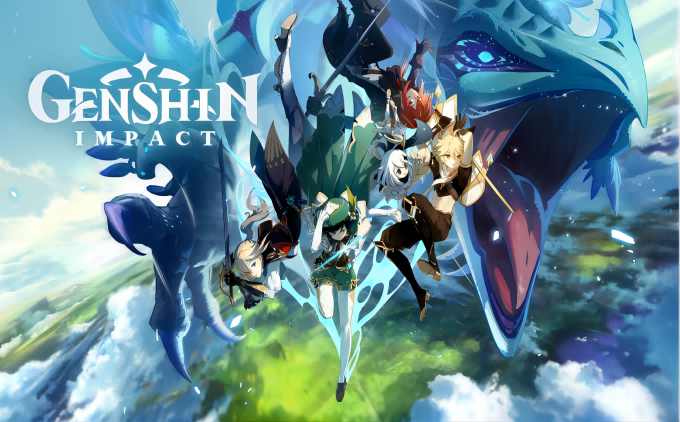
Here are some examples of industry-leading fantasy-themed "Genshin Impact" and new science fiction-themed "Honkai: Star Rail" to analyze some issues that need to be paid attention to in game localization, hoping to be helpful to you who want to do game translation~
With the continuous update and iteration of the game version, if the handling and expression of proper nouns are inconsistent, the player's experience will be greatly reduced. Therefore, establishing a game-specific glossary is an important way to ensure the consistency of translation content. Before establishing the glossary, we must first understand the general game system.
Translators who have less contact with games generally report that understanding the various game terms is a major challenge. Select internationally renowned and representative games in each category (MOBA: LOL or DOTA2 / FPS: APEX /ACG : Genshin Impact, etc.), switch to English after familiarizing with the Chinese interface (find a multilingual game as a corpus), and establish your own glossary.
A common setting when the game requires multiple NPCs to form a team. I remember a certain English game was translated as "Party Setup," which was confusing.
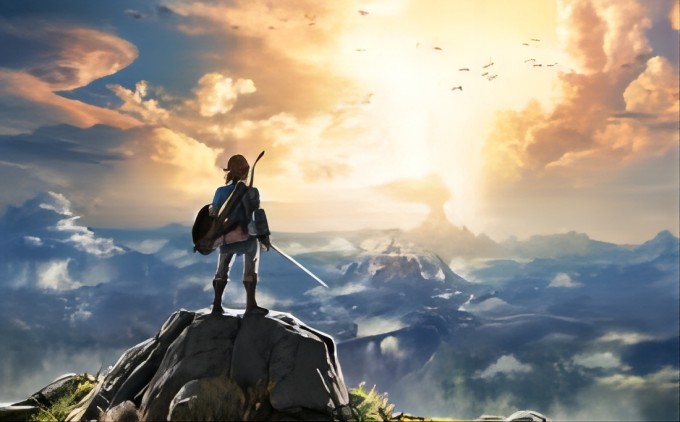
Every game has such an encyclopedia, including tutorials and various game materials. The name may also differ in other games, such as Codex, Zelda's Hyrule Compendium (and the game's encyclopedia is really a "picture" encyclopedia, with only pictures of various things) or Civilopedia in Civilization.
The reason for giving this example is that the same concept in Star Rail has been changed to "Navigation," which is more in line with the sci-fi setting.
When it comes to the most headache-inducing texts, game settings are definitely at the top of the list. These settings are likely to be unique concepts in the game, and there is no established translation method. A large amount of corpus in related scenarios needs to be collected as a reference.
Let's look at a few examples:
I didn't expect it, there really is a god called the West Wind God in Greek mythology (actually, there are gods of the east, west, south, and north winds). Zephyrus, corresponding to the Roman god - Favonious. Well, it's not easy to be a translator without some culture.
Hillchurls are common enemies in "Genshin Impact" and look rather stupid. Hill =丘 is easy to understand, and churl = a rude, savage person, a country bumpkin. The English localization has created a unique term, which is very powerful. In addition to the meaning of the Chinese language itself, it also translates the character portrait of the monster.
虚= void is easy to understand, but the meanings of卒 and ranger do not completely correspond. Let's take a look at the meaning of ranger. Ranger originally referred to a forest ranger, and the setting of a ranger in dnd is similar to this meaning:
Far from the bustle of cities and towns, past the hedges that shelter the most distant farms from the terrors of the wild, amid the dense-packed trees of trackless forests and across wide and empty plains, rangers keep their unending watch.
In the United States, Rangers are the famous Ranger troops, good at using rapid guerrilla and reconnaissance tactics to infiltrate behind enemy lines to attack targets, and have developed from the Revolutionary War, the Civil War, to World War II.
In this way, the ranger in Star Rail tends to refer to the latter, indicating the troops of the "anti-matter legion" in the story. Speaking of rangers as elite troops, "卒" seems more like a soldier.
How about it, is game translation a challenge and fun?
In addition to the game terms and game settings mentioned above that need to be paid attention to in localization, there are also sensitivity to cultural differences between Chinese and English, and the use of colloquial and slang.
In general, game localization requires a solid language foundation, sensitivity to cultural differences, and an in-depth understanding of the game itself. A good translation lies in appropriate creation when necessary, rather than just a simple conversion of words.