

Telephone
+86.17749509387
+86.(025)5223 8890

WordTech
2025-12-10 14:59:19
0
In our more and more interconnected world nowadays, it is of great essence to have communications with people from diverse linguistic backgrounds. Language translation has become an crucial tool to break down barriers and promote global understanding. And with artificial intelligence (AI) quickly advancing, outstanding progress has been achieved in machine translation services. Despite so, with great power comes great responsibility. The employment of AI in language translation comes with its own set of risks. Let's dive into the possible pitfalls and challenges of applying AI for translation.
The Promise of AI Translation
AI translation services have made communication among various languages more accessible than ever. They offer quick and convenient translations for text, websites, and even spoken words. These tools are usually priceless for travelers, businesses, and individuals with attempts to grap foreign content or connect with people from around the world. However, every coin often has two sides.
Loss of Nuance
AI translation systems work by learning patterns from a great number of text data. They can struggle to capture the nuances of human language in spite of their amazing efficiency. Tones, humor, cultural references, and idiomatic expressions are usually omitted in translation. Just as those in some breaking news about translation recently, where nuances were missed and content could be misleading, the same applies to AI translations. Miscommunications and misunderstandings can arise, potentially exacerbating relations and resulting in embarrassment.
Biased Translations
Another major concern with AI translation is the potential for bias. AI models are trained on the vast amount of text available on the internet, which unfortunately includes biased or prejudiced content. Just as something generated controversy for sometimes perpetuating biases, AI translations can also produce translations perpetuating stereotypes, discrimination, or misinformation. This can have serious implications, especially in sensitive or diplomatic contexts where precise and unbiased translations are crucial.
Privacy and Security
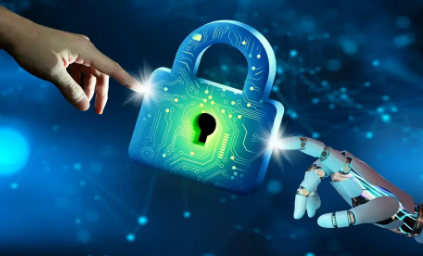
AI translation services often require users to input their text for translation. While reputable companies take privacy and security seriously, there is always a risk that sensitive or confidential information could be exposed, even unintentionally. As we've seen with privacy concerns related to AI-generated news, the same concerns apply to AI translation. It's essential to use trusted and established services, but it's still crucial to be conscious of potential data vulnerabilities when applying AI for translation.
Accuracy Issues
AI translation is not perfect and can pose mistranslations or awkward phrasings. Relying solely on AI for important documents, contracts, or academic work can be risky, much like the inaccuracies found in Microsoft's AI-generated news. Always consider having translations reviewed by a human expert for critical or professional content.
Excessive Dependence on Technology
Despite the fact that AI translation can enjoy unbelievable convenience, there's a risk that people might have excessive reliance on it. The danger is that we stop learning other languages, assuming that the technology will always be there to bail us out. Language is a fundamental part of culture and communication, and it's priceless to learn and appreciate different languages and the nuances they bring to our understanding of the world.
Conclusion
AI translation services have come a long way and have made the world a smaller, more accessible place. However, as with any powerful technology, they come with risks. Loss of nuance, potential biases, privacy concerns, accuracy issues, and over-dependence on technology should all be taken into account. It's essential to use AI translation with caution, especially for sensitive or professional purposes. Despite the fact that AI can be a useful tool, human expertise remains indispensable when it comes to preserving the richness and accuracy of languages.
In light of recent news, we see parallels in the challenges of using AI for translation. Just as technology must be wielded responsibly in news generation, it should also be used with care in language translation. In the end, technology should enhance our connections, not block them, and it's our responsibility to ensure it does so accurately and impartially.