

Telephone
+86.17749509387
+86.(025)5223 8890

WordTech
2025-09-12 10:06:08
0
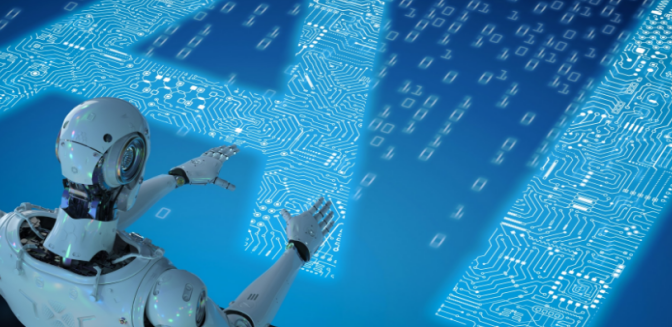
Artificial intelligence (AI) boasts great popularity across various fields, including translation services. It is because of AI’s swift, cost-effective solutions that many people ask it for translation. But can it ever truly measure up to human translators?
One study found that many linguists thought machine translation generated work irritating those people involved. Besides, some linguists provide post-editing language services for material translated with AI. What was said above means that companies may attempt to save money with machine translation, but many end up paying human translators to correct the errors.
Machine Learning Doesn't Look at Words as Words
Maybe the most significant difference between human and AI translators is the ways they see and translate words, phrases and sentences.
Human translators look at words as what they are: an integral, yet small, part of daily communication. They can see each word in relation to a provided sentence and context and then find a equivalent word (or words) in another language to show the same idea. Linguists admit that literal translations are barely effective and don't concentrate themselves on word-for-word translation. Instead, they try to have communication of ideas most properly and correctly in another language.
Machine learning looks at translation from a quite different perspective. It breaks down sentences and utilizes numerical representations to code and map the text. In spite of the fact that this process has become more and more complicated and accurate over the years, the systematic approach is still inferior to the natural translation process performed by human linguists.
Language Changes Faster Than Machines
Being fluid, language constantly adapts to enable users to express themselves in a constantly evolving world. New words are regularly becoming standard, ranging from new technologies to recent slang and medical jargon.
These numbers are only in reference to one language. Now imagine all the continual changes occurring all of the languages worldwide. As advanced as machine learning nowadays, it simply cannot keep up with the ebb and flow of one language, let alone multiple.
Machines Aren't Experts in Industry-specific Terminology
Similar to AI struggling to stay relevant with language evolution, it is also lacking in industry-specific vocabulary knowledge. Machines translate words at the surface level with no consideration of context, audience, or industry.
Take the word "acute" for example. In the medical field, an acute condition refers to one suddenly occurring and typically lasting for a short period. Nevertheless, in more general situations, acute means sharp or astute. Mathematicians and engineers also use the word to describe a certain type of angle.
These various definitions have reliance on context and industry. Where a highly trained and qualified translator can easily distinguish an acute condition from an acute angle, whereas machines cannot.
What was said above just shows a simple example of how unique the vocabulary is between two industries. In order to translate accurately numerous industry-specific terms, in-depth knowledge is also required .
The healthcare industry is a prime example of this. Medical professionals utilize sophisticated terms to refer to diseases, treatment plans and diagnoses. AI does not have the medical expertise to have accurate translation of those words — but medically qualified linguists do.
Errors in AI Translation Can Have Detrimental Effects
According to a certain study released in the past, one software had an extremely high accuracy rate for seven common languages. Generally speaking, these numbers seem promising. But they foster a misguided trust in AI translation.
Healthcare demands the utmost care and leaves no room for mistakes. Despite the fact that a great number of medical professionals have employed AI translation out of necessity, human translators are always the preferable choice. With innovations like on-demand video remote interpreting, healthcare professionals can quickly connect with linguists of high quality and leave no roon for fears of miscommunication errors.
Invest in Highly Qualified Linguists
To guarantee you're receiving language services of the highest quality, trust the experts at Yifa. Schedule a demo of our Yifa platform to see how you can have access to qualified linguists for all your language access needs. Our linguists have expert experience in providing high-quality and accurate services.