

Telephone
+86.17749509387
+86.(025)5223 8890

WordTech
2025-07-11 16:03:03
0
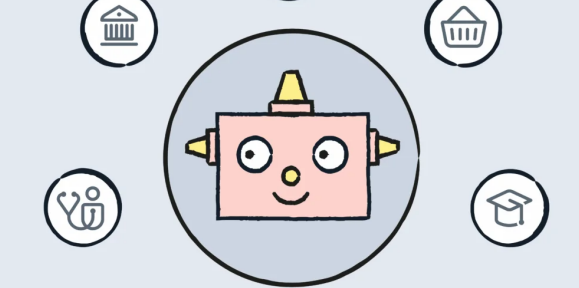
AI (Artificial Intelligence) has been a crucial tool for humans in recent years. Not only does AI enable machines to think like humans, but it also performs a wide variety of tasks. AI is used with chatbots, self-driving
cars, streaming services, healthcare technology, and even translation. Some experts are asking the question of whether or not AI will overtake jobs done by humans!
For now, AI can have its own fantastic work in many areas; however, it’s not yet ready to take over human jobs. AI is quickly growing into an assistant complementing human work, with translation work included.
Many businesses are turning to AI for the translation of their business documents. But does AI have ability to do all the work of a human translator? This article will give you an ans First, we briefly explain what AI is and how it is employed in translation work. We also review the advantages and disadvantages of AI vs. human translations and when a company may want to choose one or the other.
AI is a branch of computer science dealign with building smart machines which imitate human intelligence and thinking. Artificial intelligence is mainly utilized in computer systems, with such applications as speech recognition, language processing, and more.
Its language capabilities make AI widely used for translation services. The software differs from standard machine translation. The technology does, however, use machine learning. Using advanced machine learning, AI translator tools can apply this to languages. AI-translation tools use neural machine translation (NMT).
AI translation tools can now recognize complex sentence structures, tone, and more. Some are also able to recognize humor.
Some businesses find that AI translation tools are faster than human translators and are usually more accurate than standard machine translation. However, these machine translations are not as precise as the work of human translators.
It has been noted in the previous section that AI translation tools have both advantages and disadvantages. We’ll discuss both in this section.
Advantages of AI Translations
Speed and efficiency
The reason why some businesses have started integrating AI translation tools into their workflow and processes is that AI translators can understand large amounts of data and translate the text within a few seconds.
Accessibility
AI translation tools provide accessibility by being easy to integrate with other tools and platforms, entitling individuals to convenience.
Cost-effective translation tool
The cost of an AI-powered translation tool has dramatically decreased in recent years. The result is that instant translations are now more accessible to individuals and businesses without the time and cost of working with a translator or a translation agency.
Versatility
AI translation tools are evolving at a quick rate; they learn and improve swiftly, making these tools a great partner able to work across different industries and around the world.
Disadvantages of AI Translation
Lack of cultural context
Unfortunately, this is one of the biggest disadvantages of AI technology for translation. The software cannot understand the cultural context, leading to inconsistencies and errors.
Perpetuating biases
AI translators get their information from the Internet so that they may implement biases within the text translated by them.
Poor linguistic context
These translation tools are also unable to recognize or handle idioms, and some types of humour are not well understood when translated.
Data security
Translation often means working with sensitive information. Unfortunately, there is a high possibility of data breaches with AI tools.
What can be seen is that there are both advantages and disadvantages of using AI translation tools. In the next section, we’ll review the importance of human translations.
Unlike AI translation tools, human translations, such as those provided by Yifa, can deal with nuances, cultural context, and more. Human translators understand idioms, humor, etc. These are all advantages that human translations have over those produced solely with AI. We believe that AI, at least for the foreseeable future, will not replace human translations. Instead, AI will become a more effective, efficient partner for human translators.
Businesses are increasingly reaching out to global markets. Due to that, they must employ multiple languages for their outreach. To avoid miscommunication, which can cause significant workflow delays and negatively impact an organization’s brand and image, it is essential to ensure accurate translation of materials.
These are the reasons why human translations are so important and why AI (at least at this point) is not able to produce the best translations in all instances.
So, how can you choose between when to use AI or human translation services? We’ll explore it in this section. It can be challenging to determine which translation service is best.
When to Choose AI Translation?
You might consider using AI translation tools for projects with a large volume of content to translate. Although the accuracy and cultural context may not be good, these can be corrected by human translators later. The key here is to translate as much of the material as possible. A fast turnaround is especially crucial when we deal with a tight deadline and a large amount of content.
Another way of using AI translation tools is with social media content, reviews, and more. For these tasks, AI is usually the best option. Here, the text needs translating fast, and a high level of accuracy is not required. It’s crucial to translate and get the messages out quickly.
Human translators are the best when your company is dealing with content with cultural nuances, language sensitivities, humor, idioms, and more. In this case, a highly accurate translation is significant to reach the target market correctly and efficiently.
A human translator is also better if the content deals with a specific subject matter. Here, again, AI may not know how to deal with translating the text correctly. In addition, AI may not be able to correctly manage the translation of jargon and other specialized language contained in the content. A human translator who has expertise and knowledge of the subject is the better choice.
Cultural sensitivity is another reason to choose a human translator over AI. Human translators, like those who work for Yifa, who have experience with the language and knowledge of the culture, can better translate the material to fit the target audience. AI translators lack this ability.